
Color Psychology in Web Design: How Colors Drive User Behavior
Published on February 4, 2026 • 12 min read
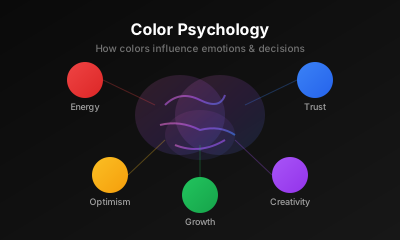
Every color you see triggers a subconscious response. Whether you're aware of it or not, colors shape how you feel about websites, products, and brands within milliseconds. This isn't just design theory — it's neuroscience backed by decades of research.
Quick Navigation
The Science Behind Color Perception
When light hits your retina, specialized cells called cones interpret different wavelengths as colors. But here's where it gets interesting: this visual information doesn't just go to your visual cortex. It also travels to your limbic system — the emotional center of your brain.
Research from the University of Winnipeg found that people make subconscious judgments about products within 90 seconds. Up to 90% of that assessment is based on color alone. That's not a typo — color accounts for the vast majority of first impressions.
Key Research Finding
A study published in Management Decision found that color increases brand recognition by up to 80%. This recognition translates directly into trust — and trust converts into sales.
Color psychology isn't universal, though. Cultural context matters significantly. White symbolizes purity in Western cultures but represents mourning in parts of Asia. Red means luck in China but signals danger in the West. Always consider your target audience's cultural background when selecting your palette.
What Each Color Communicates
Red
Urgency • Passion • Energy • Action
Red increases heart rate and creates a sense of urgency. It's no coincidence that clearance sales and "Buy Now" buttons often use red. Netflix, YouTube, and Coca-Cola leverage red to create emotional intensity and immediate recognition.
Best for: Sale announcements, CTAs requiring immediate action, food industry, entertainment, sports brands
Blue
Trust • Stability • Professionalism • Calm
Blue is the most universally favored color across genders and cultures. It activates the parasympathetic nervous system, creating feelings of calm and security. That's why banks, healthcare companies, and tech giants like Facebook, LinkedIn, and IBM chose blue for their branding.
Best for: Finance, healthcare, technology, corporate sites, B2B services, social networks
Yellow
Optimism • Clarity • Warmth • Attention
Yellow triggers the release of serotonin, the "feel-good" neurotransmitter. It's the first color the human eye notices, making it perfect for grabbing attention. IKEA, McDonald's, and Snapchat use yellow to evoke happiness and approachability.
Best for: Highlight important information, children's products, food services, window displays, warning indicators
Green
Growth • Health • Nature • Wealth
Green is the easiest color for the eyes to process. It represents balance and is strongly associated with environmental consciousness and financial prosperity. Whole Foods, Spotify, and financial apps like Robinhood strategically use green.
Best for: Eco-friendly brands, health and wellness, finance, outdoor products, organic food, "success" confirmation messages
Purple
Luxury • Creativity • Wisdom • Mystery
Historically, purple dye was extremely expensive, reserved only for royalty. That association persists today. Purple stimulates the problem-solving areas of the brain and is often used by creative industries. Cadbury, Hallmark, and Twitch use purple to stand out.
Best for: Luxury products, creative agencies, beauty brands, anti-aging products, spiritual or imaginative content
Orange
Enthusiasm • Confidence • Friendliness • Adventure
Orange combines red's energy with yellow's friendliness. It's confident without being aggressive, making it excellent for CTAs that need to stand out without feeling pushy. Amazon, Fanta, and Harley-Davidson use orange effectively.
Best for: E-commerce CTAs, entertainment, sports, food and beverage, youth-oriented brands
Black
Sophistication • Power • Elegance • Exclusivity
Black creates a sense of exclusivity and premium quality. It's timeless and works exceptionally well for luxury brands. Apple, Chanel, Nike, and countless high-end brands use black to communicate sophistication and authority.
Best for: Luxury goods, fashion, tech products, professional services, minimalist design
Best Colors for CTAs and Conversions
Here's where theory meets revenue. The color of your call-to-action button can significantly impact conversion rates. HubSpot ran an A/B test comparing red and green buttons — the red button outperformed green by 21%.
But here's the nuance most people miss: it's not about one color being universally better. It's about contrast. Your CTA needs to pop against the rest of your page.
✓ High-Performing CTA Colors
- Orange — Energetic, non-aggressive urgency
- Green — "Go" signal, positive action
- Red — Urgency, limited-time offers
- Blue — Trust-based decisions (finance, health)
✗ Colors to Use Carefully
- Gray — Passive, lacks urgency
- Black on dark backgrounds — Low visibility
- Light yellow — Hard to read text on top
- Pastels — May appear inactive/disabled
Pro Tip: The Isolation Effect
Use the Von Restorff effect to your advantage. When one element looks dramatically different from everything around it, the brain remembers it better. Make your primary CTA a color that appears nowhere else on the page. Test it with ColorHexify to ensure sufficient contrast.
Color Choices by Industry
Color conventions vary by industry. Breaking these conventions can either differentiate your brand or confuse your audience. Know the rules before you decide to break them.
| Industry | Primary Colors | Why It Works |
|---|---|---|
| Finance & Banking | Blue, Green, White | Trust, growth, transparency |
| Healthcare | Blue, Green, White | Cleanliness, calm, life |
| Food & Beverage | Red, Yellow, Orange | Appetite stimulation, energy |
| Technology | Blue, Black, White | Innovation, sophistication |
| Eco/Organic | Green, Brown, Earth tones | Nature, sustainability |
| Luxury | Black, Gold, Purple | Exclusivity, elegance |
| Children's Products | Primary colors, Bright hues | Playfulness, energy, fun |
Common Color Psychology Mistakes
1. Ignoring Cultural Context
A global brand using white for a wedding-related product might alienate Asian markets where white signifies death. Research your target demographics thoroughly.
2. Following Trends Blindly
Just because millennial pink was everywhere in 2017 doesn't mean it's right for your B2B software company. Choose colors that align with your brand values, not just what's trending.
3. Neglecting Accessibility
About 8% of men and 0.5% of women are color blind. If your red error message and green success message look identical to them, you've failed. Always use additional indicators like icons or text.
4. Too Many Colors
Using 7+ colors creates visual chaos and dilutes your message. Stick to 3-5 colors maximum: primary, secondary, accent, and 1-2 neutrals.
5. Not Testing
What works in theory might fail in practice. A/B test your color choices on real users. Let data guide your final decisions, not just gut feeling.
Practical Application Guide
Ready to apply color psychology to your project? Follow this step-by-step framework:
Define Your Brand Personality
List 3-5 adjectives that describe your brand. Trustworthy? Energetic? Luxurious? Playful? These words will guide your color selection.
Research Your Audience
Consider age, gender, cultural background, and industry expectations. A Gen Z audience responds differently to color than Baby Boomers.
Analyze Competitors
What colors dominate your industry? Decide whether to conform (for trust) or differentiate (for attention). Both strategies can work.
Build Your Palette
Use ColorHexify to create harmonious color combinations. Test different shades and ensure contrast ratios meet accessibility standards.
Test and Iterate
Run A/B tests on your most important elements. Track conversions, time on page, and bounce rates. Refine based on real data.
Start Building Your Palette
Ready to put color psychology into practice? Use ColorHexify to explore colors, test contrast ratios, and create harmonious palettes that resonate with your audience.
Try ColorHexify FreeThe Bottom Line
Color psychology isn't magic — it's science applied to design. The right colors won't save a bad product, but they can significantly amplify a good one. Every color choice sends a message. Make sure yours tells the right story.
Remember: test everything. What works for one brand might not work for yours. Use the principles in this guide as a starting point, then let your users' behavior guide refinements.
Now go make something beautiful — and effective.